Daily VNA Checks Every Operator Should Complete Before Starting Work
Before every shift begins, a VNA forklift should undergo a thorough pre-use inspection. These simple daily checks are one of the most effective ways to prevent breakdowns, improve operator safety and identify potential issues before they develop into costly repairs.
Whether your warehouse operates a single VNA truck or an entire fleet, daily inspections help ensure every truck remains safe, reliable and ready for work. They also support planned maintenance programmes by highlighting faults early, reducing unplanned downtime and extending equipment life.
In this guide, we'll explain exactly what operators should check before every shift and why these inspections are such an important part of warehouse safety.
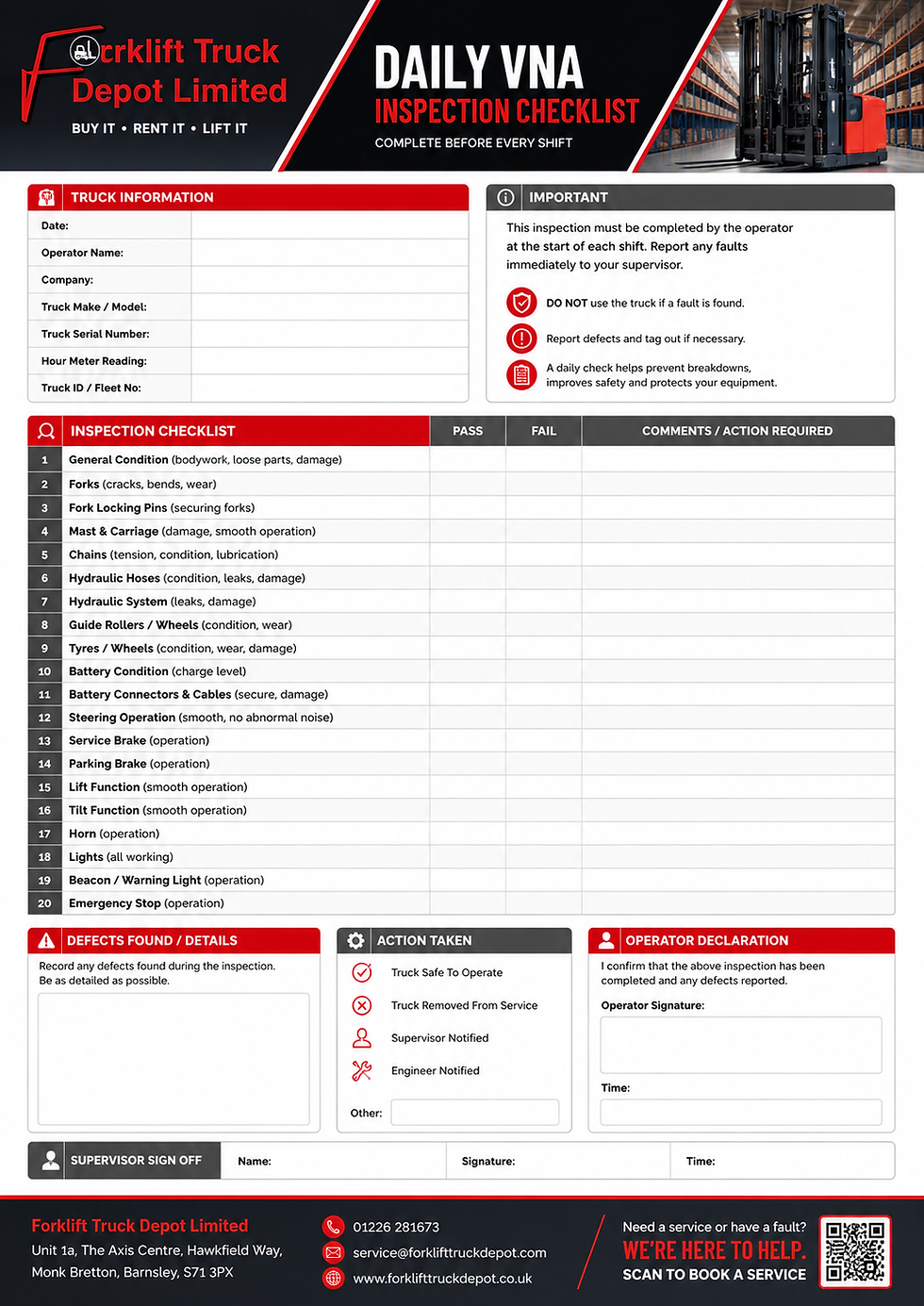
1. Check for Visible Damage
Walk completely around the truck looking for:
Cracked panels
Loose covers
Bent guards
Missing bolts
Oil on the floor
Damage from previous impacts
Even small signs of damage should be reported immediately.
2. Inspect the Forks
The forks carry every load, making them one of the most important safety components.
Check for:
Cracks
Bent forks
Uneven fork tips
Excessive wear
Damaged locking pins
Never use damaged forks.
3. Examine Chains & Mast
Look carefully for:
Loose chains
Dry chains
Rust
Uneven tension
Damaged rollers
Missing lubrication
The mast should raise and lower smoothly without unusual noises.
4. Check Hydraulic Hoses
Inspect all visible hydraulic hoses for:
Oil leaks
Cracks
Bulges
Loose fittings
Damaged protective sleeves
Any hydraulic leak should be investigated immediately.
5. Test Steering
Before entering an aisle:
Turn fully left
Turn fully right
Check for unusual resistance
Listen for knocking noises
Confirm smooth operation
6. Test Brakes
Ensure:
Service brake operates correctly
Parking brake holds the truck securely
No unusual noises
No excessive pedal travel
7. Check Wheels & Tyres
Inspect for:
Flat spots
Cuts
Wear
Loose wheel nuts
Damaged load wheels
Worn guide rollers (if fitted)
8. Battery & Charging System
For electric VNA trucks:
Battery fully charged
No damaged connectors
No exposed cables
Electrolyte levels (where applicable)
Charger disconnected correctly
9. Controls & Safety Systems
Test:
Horn
Lights
Beacon
Emergency stop
Seat switch
Display screen
Steering controls
Lift controls
Everything should respond immediately.
10. Wire Guidance (If Fitted)
Wire-guided trucks should also be checked for:
Guidance engagement
Stable tracking
No guidance alarms
Smooth aisle entry
No drifting
Any issues should be reported before operating at height.
11. Warning Lights & Error Codes
Modern VNA trucks constantly monitor themselves.
Never ignore:
Warning lights
Error messages
Service reminders
Fault codes
Report these immediately.
12. Record Your Inspection
Every inspection should be recorded.
A documented daily inspection:
Demonstrates compliance
Helps engineers diagnose faults
Supports maintenance planning
Improves fleet reliability
Why Daily Checks Matter
Completing a daily inspection takes only a few minutes but can prevent:
✔ Unexpected breakdowns
✔ Expensive repairs
✔ Lost productivity
✔ Unsafe operation
✔ Damage to stock
✔ Warehouse downtime
Regular operator inspections combined with professional servicing provide the best protection for your VNA fleet.
FAQs
Are daily VNA checks a legal requirement?
Operators are expected to carry out pre-use inspections before operating workplace equipment. Employers should ensure suitable inspection procedures are in place and that faults are reported and addressed before the truck is used.
How long do daily VNA checks take?
A thorough pre-use inspection typically takes around 5–10 minutes, depending on the truck and the operator's experience.
Who should complete the daily inspection?
The operator using the VNA forklift at the start of their shift should carry out the inspection and report any defects immediately.
Should I use a VNA forklift if I find a fault?
No. If a defect affects the safe operation of the truck, it should be removed from service until it has been assessed and repaired by a competent engineer.
Do wire-guided VNA trucks need additional checks?
Yes. Operators should also confirm that the wire guidance system engages correctly, tracks smoothly within the aisle and does not display any guidance-related fault codes.
Keep Your VNA Fleet Safe, Reliable & Productive
Daily operator checks are the first line of defence against breakdowns and accidents, but they're only one part of an effective maintenance programme. Forklift Truck Depot provides specialist VNA servicing, LOLER inspections, breakdown support and planned maintenance to help keep your warehouse operating safely and efficiently.

Comments